.avif)
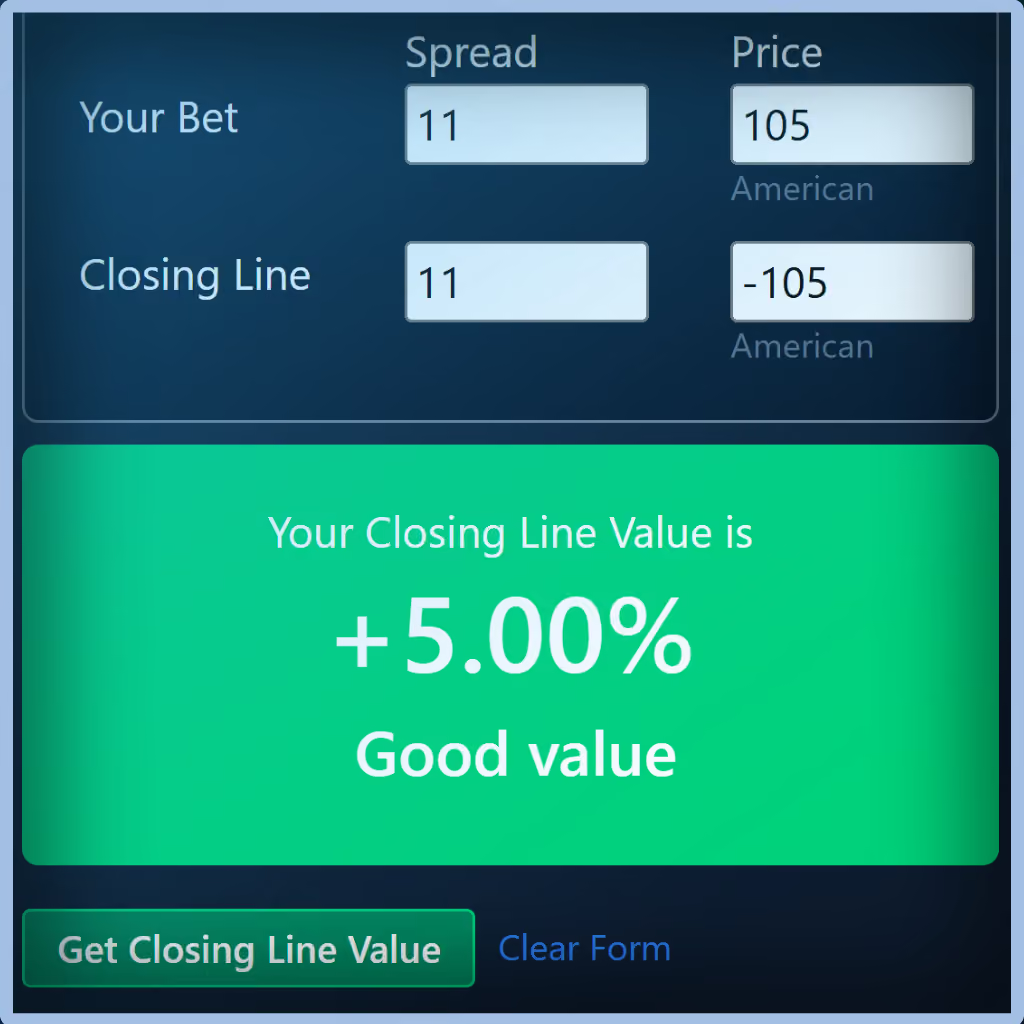
Closing line value measures how your bet compares to the final market price (the closing line).
If you bet at a better number than the closing line, you have positive CLV, meaning you beat the market. If your number is worse, you have negative CLV.
Consistently positive CLV is one of the strongest indicators of long-term betting success.
Find out more about closing line value as a betting strategy.
CLV is calculated by comparing the implied probability of your bet to the implied probability of the closing line.
To calculate your closing line value, convert the prices of the bet you made and the closing line to implied probabilities.
Subtract the probability of the line you bet from the closing line. Then divide that sum by your bet's probability.
No. Simply subtracting implied probabilities gives you the difference, but not the relative value of your bet compared to the market.
CLV is expressed as a percentage so you can measure how much better your price is, not just how different it is.
There’s no single universal CLV formula, but not all methods measure value the same way.
Some approaches only show absolute differences, while others (like this calculator) express CLV as a percentage — giving you a clearer picture of your true edge.
Using a vig-free closing line gives you a more accurate measure of your true edge. This is your expected value in the bet.
If you enter the closing price as it appears at the sportsbook, adjust for the vig. At -110, that means subtracting 4.55 percentage points from the result.
MLB is a moneyline sport. Using the moneyline provides a more accurate measure of value than the runline, which doesn’t fully capture the underlying probabilities needed for CLV calculations.
